

Most job boards don't check anything.
They pull listings from the web, index them, and show them to you. That's it. Whether the company is real, whether the role is actually remote, whether you can legally take the job from your country — none of that is verified. You find out when you apply, or worse, after you've already been through two interview rounds.
CEEhire works differently. Before any job goes live, a human reviews it. That human is usually me.
Here's exactly what I check.
1. Is the company real and actively hiring?
This sounds obvious. It isn't.
Job boards are full of listings from companies that have frozen hiring, closed roles quietly, or — in worse cases — don't actually exist. Ghost jobs and scam postings are a real problem, especially in the remote space where anyone can post anything and no one's checking.
For every listing, I verify:
The company has a real web presence (website, LinkedIn, Crunchbase or similar)
The role appears on their own careers page or was posted within the last 30 days
There are no obvious red flags: no salary-first pitch, no "send us your CV and we'll match you to roles," no request for personal documents before an interview
If I can't verify the company exists and is actively hiring, the job doesn't go live.
2. Is it actually remote — for you?
Not "remote-ish." Not "remote within commuting distance of Berlin." Remote in a way that works for someone based in Central or Eastern Europe.
CEEhire lists two types of remote roles, and both are clearly labeled:
EU/US Remote — the company is based outside CEE and is hiring across borders. These roles are available to candidates anywhere in the region.
Country Remote (CEE) — the role is remote within a specific CEE country, such as Poland, Hungary, Romania, or Slovakia. This means a Polish developer working remotely for a Polish company, or a Hungarian developer working from home for a Budapest-based tech firm. The job is genuinely remote — just geographically scoped to one country in our region.
Both types pass. What doesn't:
"Must be authorized to work in the US" → rejected
"Remote within Germany / France / UK only" → rejected (outside our region, not relevant to CEE candidates)
"Occasional on-site required" with no clear frequency → flagged, often rejected
3. Can you legally take this job from your country?
This is the part most job boards completely ignore.
Even if a role is remote for real and the company checks out, there's a legal layer that matters: how are they hiring? Employment requires a legal entity in your country or an Employer of Record. B2B/contractor is more flexible, but not all companies are set up for it, and some roles can't legally be structured as contractor work.
For country-remote roles within CEE, the legal question is simpler: the company and candidate are in the same country, so standard local employment law applies.
4. Is the salary range disclosed — or at least honest?
Salary transparency is one of the few things that actually helps candidates make decisions. Where a salary range is listed, I sanity-check it against market data. A listing offering €15k/year for a senior backend engineer isn't a mistake — it's bait. It doesn't go live.
For aggregated roles, salary disclosure depends on what the company chose to include in their listing — that's outside my control. What I can do is flag when a disclosed range looks unrealistic, and remove listings where the gap between the role and the compensation is obvious enough to be misleading.
No salary listed doesn't automatically disqualify a job. Dishonest salary information does.
5. Is the listing fresh?
A job posted six months ago is probably filled, paused, or forgotten.
Every listing on CEEhire must have been posted within the last 30 days. Anything older gets removed. This is non-negotiable, stale listings waste your time, and wasting your time is exactly what CEEhire is supposed to fix.
What happens when a job fails the check?
Most of the time, it just doesn't get posted.
Sometimes I'll follow up with the company if the listing is close to passing and the issue is something they could clarify (contract type, remote scope). But I don't post first and ask questions later. The job goes live only when it passes.
It's slower than just aggregating everything and throwing it at you. That's the point.
Why this matters
I know this process sounds like a lot of work for a job board. It is.
But the alternative — posting everything and letting you find out the hard way — is the reason most job boards aren't worth using.
If you're a developer in Hungary, Poland, or Romania and you've ever wasted two weeks in an interview process only to find out the company couldn't hire you due to a legal issue you weren't told about, you know why this matters.
CEEhire exists because that shouldn't happen.
Every job on this board passed this checklist. That's the promise.
Related posts

AI hiring is changing Agentic AI isn’t the only area seeing strong growth. Demand for GenAI Solutions Architects and AI Product Owners increased by 120%, while demand for LLM Engineers rose by 86.5% and MLOps Engineers by 82.2%. At the same time, AI is taking over more routine technical work. According to the analysis, it can already handle up to 70% of routine ticket resolution and reporting tasks and automate around 65% of test-case creation.
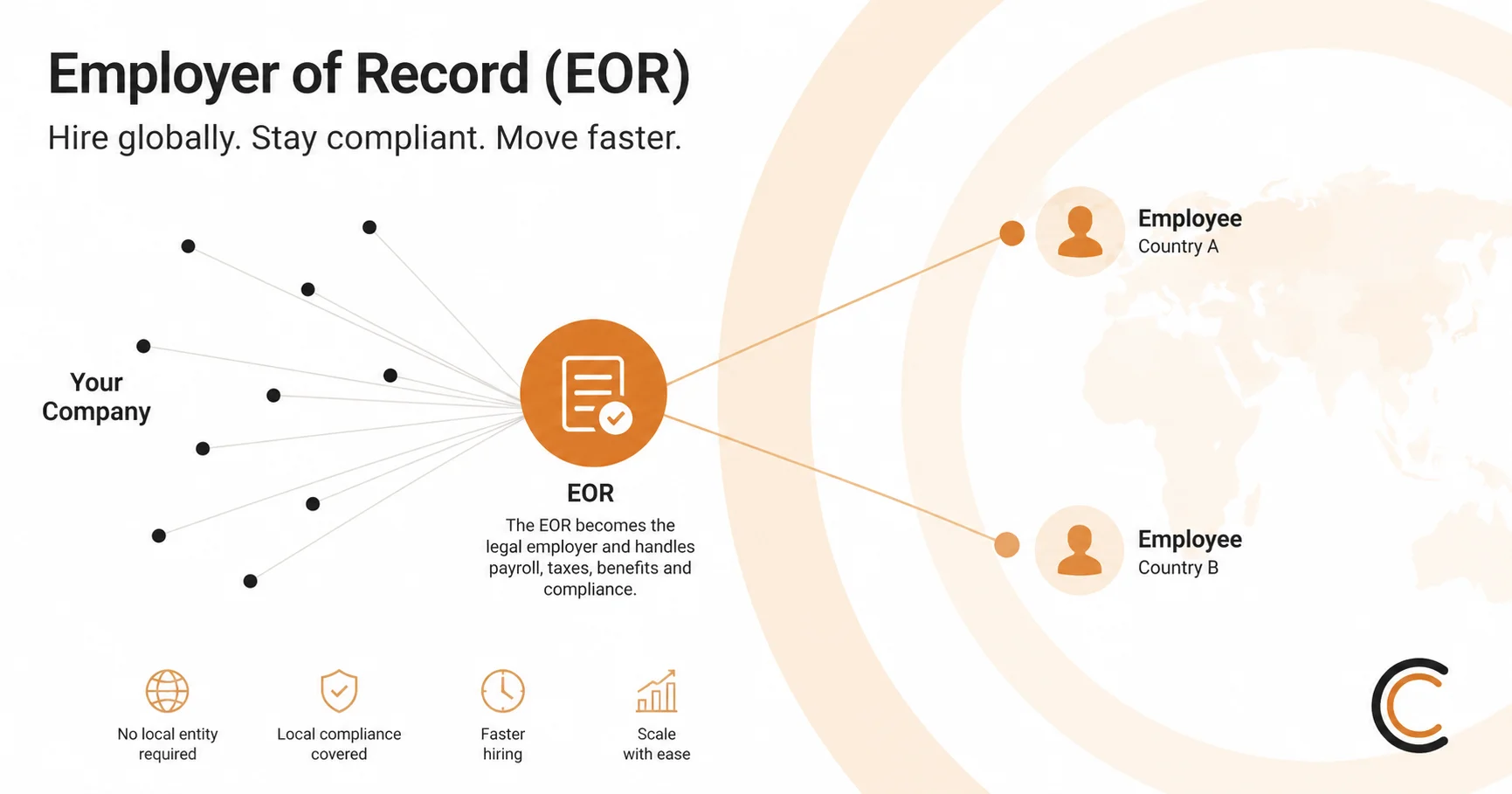
What is an Employer of Record, how does it work, and when does it actually make sense for hiring CEE tech talent? A practical 2026 guide — plus the leading EOR providers compared.

Job boards are getting harder to use for both recruiters and candidates. AI tools now apply to jobs automatically, and the usual fix, building a local network and showing up in person, gets a lot harder once the candidate and the company are in different countries.