
Poland · Hungary · Czechia · Slovakia · Romania · Bulgaria · Croatia · Slovenia
Ask any developer in Poland, Hungary, or Romania how the job market feels right now and you'll get some version of the same answer: slow, crowded, not what it was two years ago.
That's not wrong., but it's not the full picture either. The IT market didn't collapse. It got very good for some people and very hard for others and the line between the two isn't seniority. It's what you actually do. Companies in the US and UK are still hiring from Central and Eastern Europe (CEE). In four specific areas, they can't find people fast enough.
The numbers behind the "IT is dead" narrative
The pessimism has a real basis.
According to No Fluff Jobs' 2025–2026 market report, junior job postings dropped from 8% to below 6% of all IT listings in Poland. In some categories, a single junior Frontend position pulls in 78 to 149 applications. That's a lot of people competing for very few seats.
But 60% of all open IT positions are targeting mid or senior level. The senior market didn't flood. Systems got more complex, tools got harder to operate at scale, and companies that came through the 2023–2024 correction are now hiring carefully for exactly the profiles that are hardest to find. The market isn't dead, it's just uneven.
Data Engineering and AI/ML
Every company that shipped an AI product in the last two years now needs someone to keep it running. Not the model itself: the pipelines, the data quality layer, the infrastructure underneath it all.
Data Engineering and Business Intelligence postings grew 34% year-over-year. AI and ML-focused roles grew between 22% and 39% depending on the category. The roles themselves aren't new, but the number of companies that suddenly need them is.
The bar is high. Real depth in data architecture, not just Python familiarity. But developers who have that depth are getting contacted by companies in the US and EU who can't find them locally.
DevOps and Cloud
The cloud migration wave is still running. Enterprises are still moving workloads. Infrastructure is still being rebuilt from scratch. The engineers who can own that process without constant guidance , who can make architecture decisions independently -are genuinely rare.
Senior DevOps and Site Reliability Engineers from Central and Eastern Europe are among the most recruited profiles by US and EU companies right now. The skills take years to build: cloud platforms, CI/CD, security awareness, scripting, system design. There's no shortcut. Demand has consistently outpaced the training pipeline for three years. That gap isn't closing.
Cybersecurity
The EU's NIS2 directive came into force and changed the staffing calculation for thousands of companies.
NIS2 expanded cybersecurity compliance requirements across the EU. Companies that had been treating security as an afterthought were suddenly required to hire dedicated security professionals, on a timeline they hadn't planned for. Many still haven't found the people they need.
Cybersecurity job postings grew 39% year-over-year. If you work in network security, cloud security, SOC, compliance, or penetration testing, this regulatory shift created demand that simply didn't exist two years ago. CEE engineers in this space are getting inbound from Germany, the Netherlands, the UK, and the US because those companies can't find qualified people at home.
Backend Development (Python, Go, Java, TypeScript)
Not a flashy category. The most consistent one.
Backend roles account for 20–30% of all open IT positions. The specific stacks shift slightly from year to year, but the need for engineers who can build and maintain reliable server-side systems doesn't go away. AI tools are handling more boilerplate, which has raised the bar for what a senior backend developer is expected to produce but that cut in both directions. The bar went up, and so did the compensation.
The senior pool in Central and Eastern Europe grows slower than job demand. That's been true for a while and nothing in the current market changes it.
What's actually harder right now
Junior role is the toughest entry point in this market. Bootcamp graduates, experienced developers competing at lower levels, and AI tools covering more of the repetitive work, the entry level has oversupply.
Basic QA, manual testing, and repetitive automation scripting are also contracting. AI tooling is reducing headcount requirements in those areas across companies of all sizes.
One junior frontend role last year: 149 applications. One senior DevOps role the same week: four applicants. Same market, two completely different experiences.
Seniority matters less than the category you're in. A mid-level developer who owns infrastructure, works independently, and communicates well in English will get more inbound than a senior developer whose expertise sits in a shrinking area.
If you're mid or senior in data engineering, DevOps, cybersecurity, or backend work, this market still moves in your direction.
Related posts
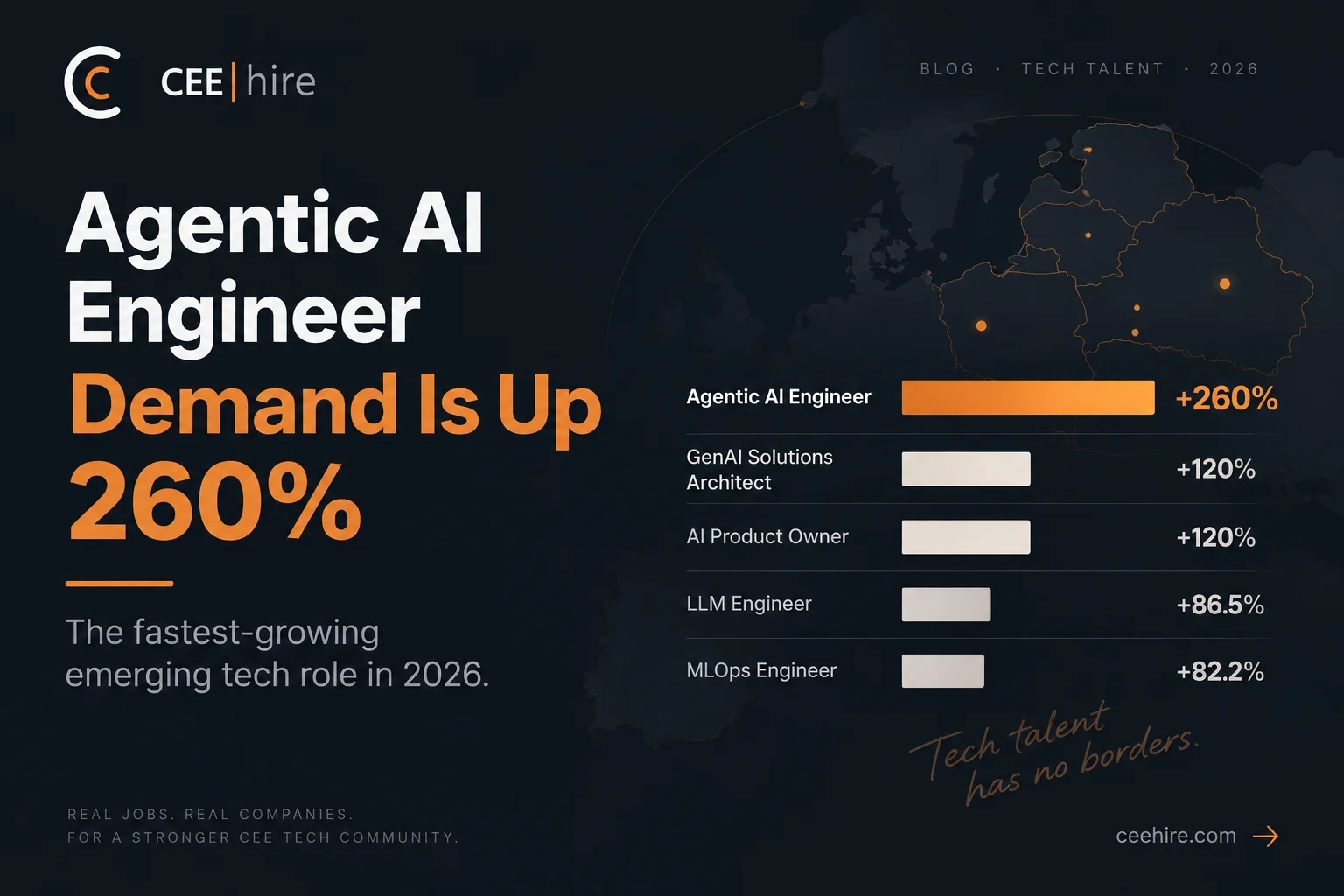
AI hiring is changing Agentic AI isn’t the only area seeing strong growth. Demand for GenAI Solutions Architects and AI Product Owners increased by 120%, while demand for LLM Engineers rose by 86.5% and MLOps Engineers by 82.2%. At the same time, AI is taking over more routine technical work. According to the analysis, it can already handle up to 70% of routine ticket resolution and reporting tasks and automate around 65% of test-case creation.
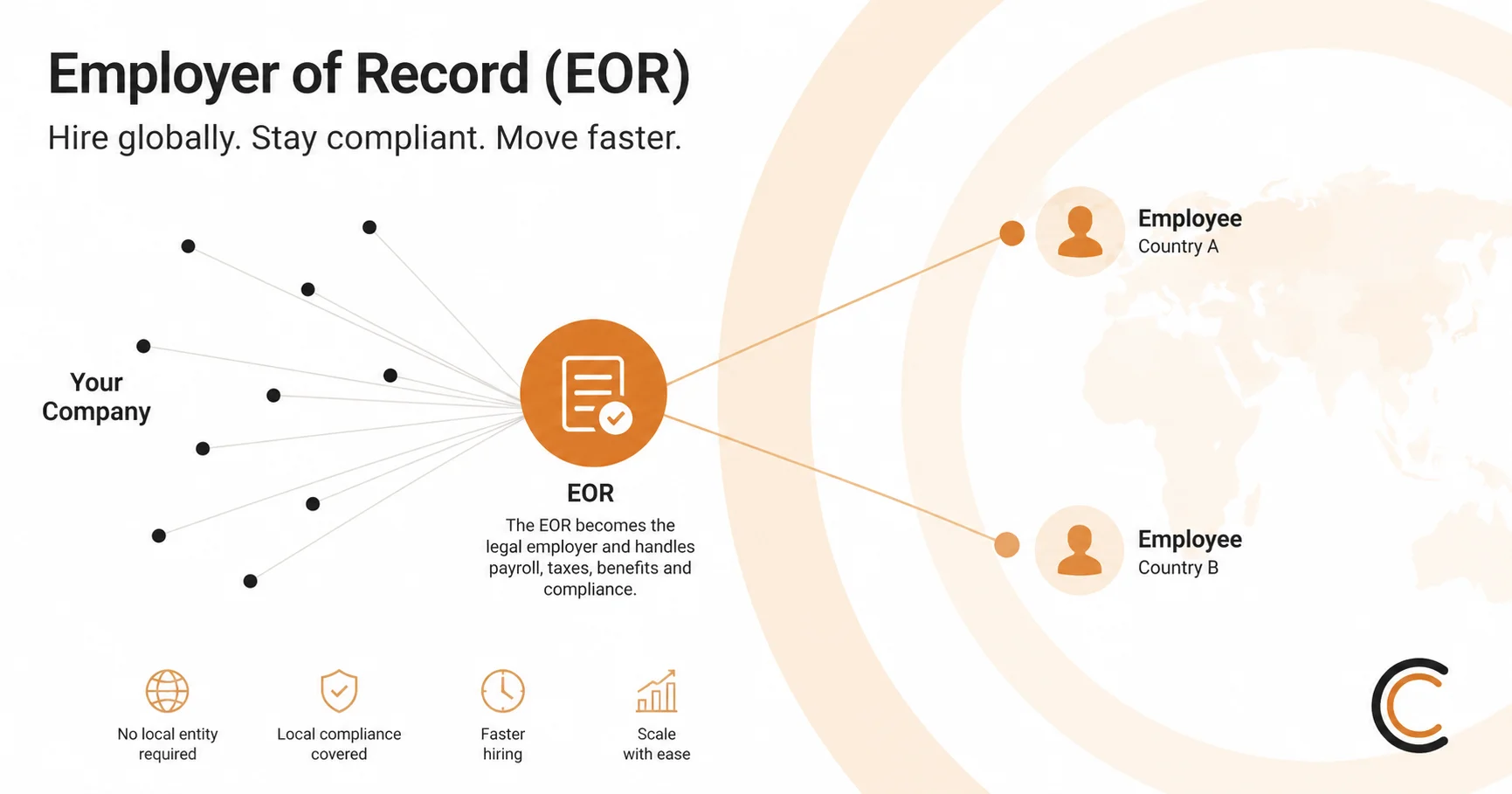
What is an Employer of Record, how does it work, and when does it actually make sense for hiring CEE tech talent? A practical 2026 guide — plus the leading EOR providers compared.

Job boards are getting harder to use for both recruiters and candidates. AI tools now apply to jobs automatically, and the usual fix, building a local network and showing up in person, gets a lot harder once the candidate and the company are in different countries.