
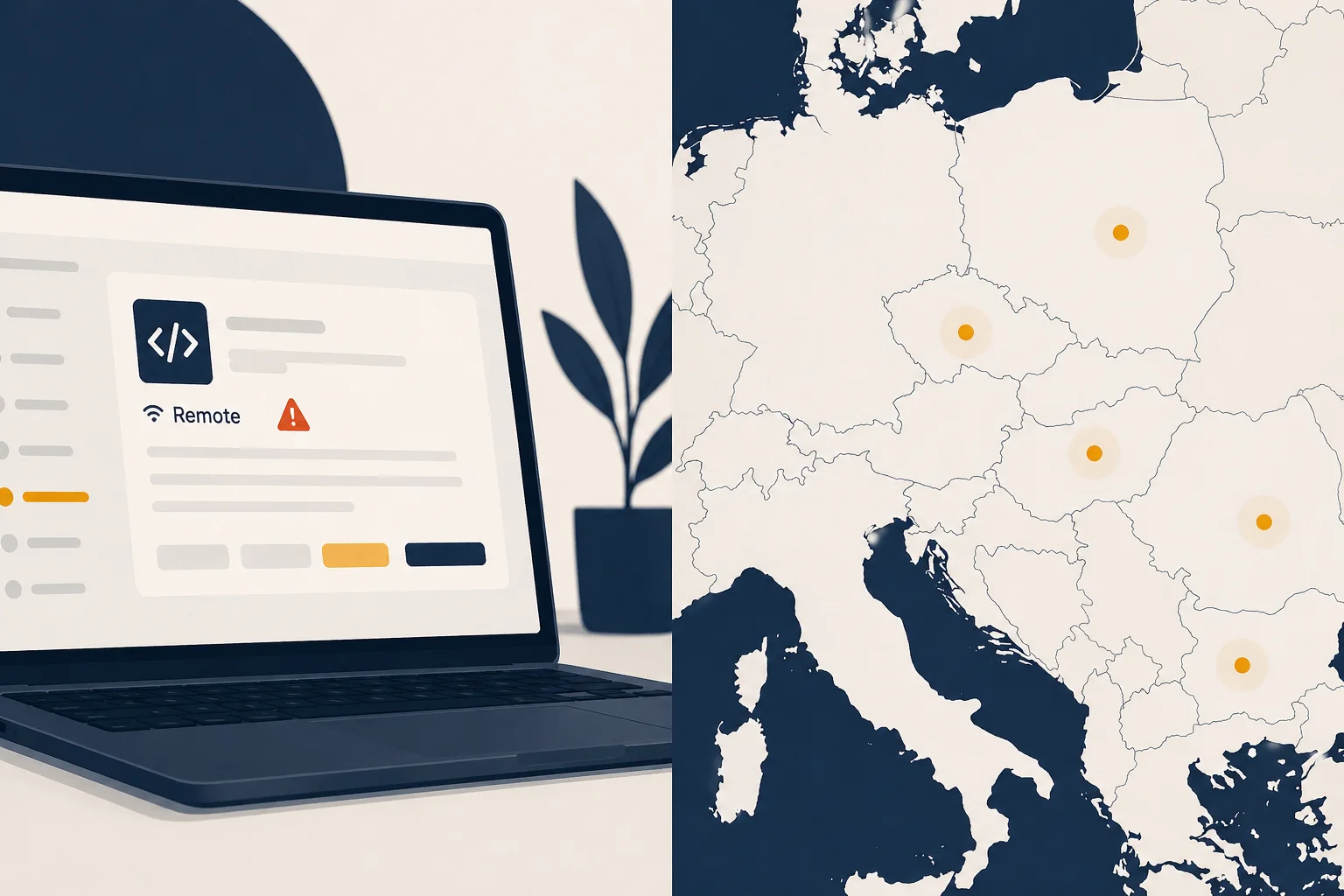
Poland · Hungary · Czechia · Slovakia · Romania · Bulgaria · Croatia · Slovenia
You've seen it a hundred times.
A job listing says "remote." You read through the requirements. You get excited. Then you find a line buried in the details:
"Remote within the US only." "Must be authorized to work in the US." "Occasional on-site required , our office is in Austin."
You close the tab. Again.
This isn't bad luck. It's a structural problem with how most job boards work and it's why We built CEEhire.
The three types of "fake remote"
After years of recruiting in the IT space, I've seen the same patterns over and over. Most fake-remote jobs fall into one of three categories.
1. US-only remote
The company is fully distributed — but only across US time zones. Legally, they can't or won't hire outside the US. Sometimes they know this. Sometimes, they just didn't think about it when writing the listing.
Either way, the job isn't available to you if you're in Warsaw, Budapest, Prague, Bucharest, or anywhere else in the region.
2. "Remote" with an asterisk
The listing says remote. What it means is: remote most of the time, but you'll need to come in for onboarding, quarterly meetings, or whenever the manager feels like it.
That's a commutable office job with a good WFH policy. Not remote work. Not if you're based in a different country.
3. The legal impossibility
This one is sneaky. The role is remote. The team is distributed. But the company only hires on local employment contracts — and they don't have a legal entity in your country.
No entity means no employment. No employment means your options are B2B/contractor only. And not every company is set up for that.
If the listing doesn't mention contract type, this is almost always the reason why.
Why job boards let this happen
Most job boards are aggregators. They pull listings from everywhere, index them, and move on.
No one reads the jobs. No one asks whether "remote" actually means remote for someone in Czechia, Romania, Bulgaria, or Slovenia. The incentive is volume — more listings, more traffic, more ad revenue.
The result: a board with 10,000 "remote" jobs where maybe 300 of them are actually accessible to you.
What "remote" should mean
If you're a developer in Hungary, Poland, Czechia, Slovakia, Romania, Bulgaria, Croatia, or Slovenia, a real remote role means:
You can work from your current country without relocating
The contract works legally — either employment via a local entity, an Employer of Record, or a legitimate B2B/contractor arrangement
The time zone overlap is workable (most EU-friendly roles expect CET ± 2h)
Every job on CEEhire is checked against these criteria before it goes live. If it doesn't pass, it doesn't get posted.
That's the whole point.
What to look for when you're searching elsewhere
Until every job board catches up (they won't), here's what to check before applying:
Check the company's entity footprint. Does the company have a legal entity in the EU? Look them up on LinkedIn — do they list offices in Europe? If not, ask about contractor arrangements before investing time in the process.
Read the full listing, not just the headline. The phrase "authorized to work in the US" is a red flag. So is "must be located in London" or "EU residents only - Germany, France, Netherlands." If your country isn't on the list, you're not on the list.
Trust sparse listings more than verbose ones. A job post that says "remote — open to EU contractors, CET timezone preferred, salary €60–80k" tells you more in one line than three paragraphs of startup-speak.
Related posts

AI hiring is changing Agentic AI isn’t the only area seeing strong growth. Demand for GenAI Solutions Architects and AI Product Owners increased by 120%, while demand for LLM Engineers rose by 86.5% and MLOps Engineers by 82.2%. At the same time, AI is taking over more routine technical work. According to the analysis, it can already handle up to 70% of routine ticket resolution and reporting tasks and automate around 65% of test-case creation.
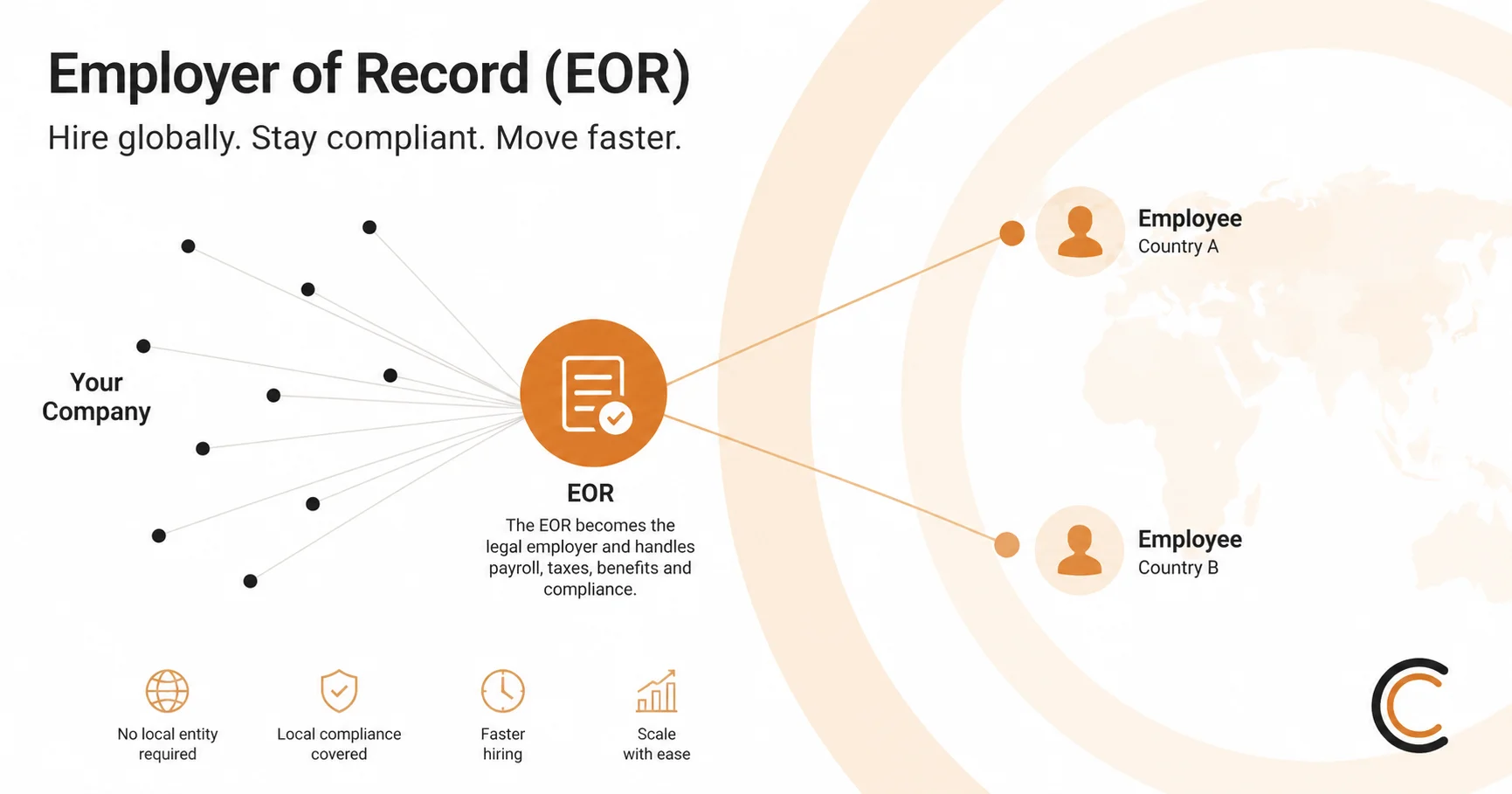
What is an Employer of Record, how does it work, and when does it actually make sense for hiring CEE tech talent? A practical 2026 guide — plus the leading EOR providers compared.

Job boards are getting harder to use for both recruiters and candidates. AI tools now apply to jobs automatically, and the usual fix, building a local network and showing up in person, gets a lot harder once the candidate and the company are in different countries.