

If you've looked for a remote IT job recently, you know how it goes.
You open a job board. You filter for remote. You get a few hundred results. You click through listing after listing. Then you find out the role is US-only. Or the posting is four months old. Or the company has no online presence whatsoever and you have no idea if it's real.
You close the tab. You start again.
I'm an IT recruiter. I've spent years on both sides of this, helping companies find engineers, and watching good developers in Poland, Hungary, Romania, Czechia, and across the region waste hours on job boards that weren't built for them.
That's why We built CEEhire.
What CEEhire is
A remote IT job board for IT professionals in Central and Eastern Europe — Poland, Hungary, Czechia, Slovakia, Romania, Bulgaria, Croatia, and Slovenia.
Every listing is hand-reviewed before it goes live. Real company. Real remote policy. EU-compatible contract. No roles that expired three months ago. No "remote" jobs that quietly require US residency.
We cover the full range of IT roles: backend, frontend, full-stack, DevOps, data engineering, QA, security, product, and design. Mid-to-senior focus, with solid junior roles where they exist.
Who it's for
IT professionals in Central and Eastern Europe who want to work for EU or US companies, remotely, without relocating. You want a real salary range before you apply. You want to know the company is actually hiring. You don't want to find out on a third interview call that the contract doesn't work in your country.
Companies hiring remote IT talent in Central and Eastern Europe — and who are willing to be upfront about contract type, remote policy, and pay. If you want to reach engineers in Poland, Hungary, Romania, Czechia, or across the region without sifting through hundreds of irrelevant applications, this is built for you.
What makes it different
Most job boards don't read the jobs they post. They aggregate, index, and move on.
CEEhire does one thing most boards skip: a human reads every listing before it goes live.
Is the company real? Is remote actually allowed from your country? Is the salary range honest? If a job fails any of these, it doesn't get posted. No exceptions.
How to get started
If you're an IT engineer: browse open jobs or sign up for weekly job alerts. We send a hand-picked list of new hand-reviewed roles. No spam, no irrelevant listings.
If you're hiring: post a job directly, or contact us if you need sourcing support , shortlisting, screening, intro calls.
Related posts

What do current DevOps listings on CEEhire actually show? Salaries range from €3,400 to €14,000/month depending on company type, and Azure is just as active as AWS in CEE-accessible roles. Here's the breakdown.
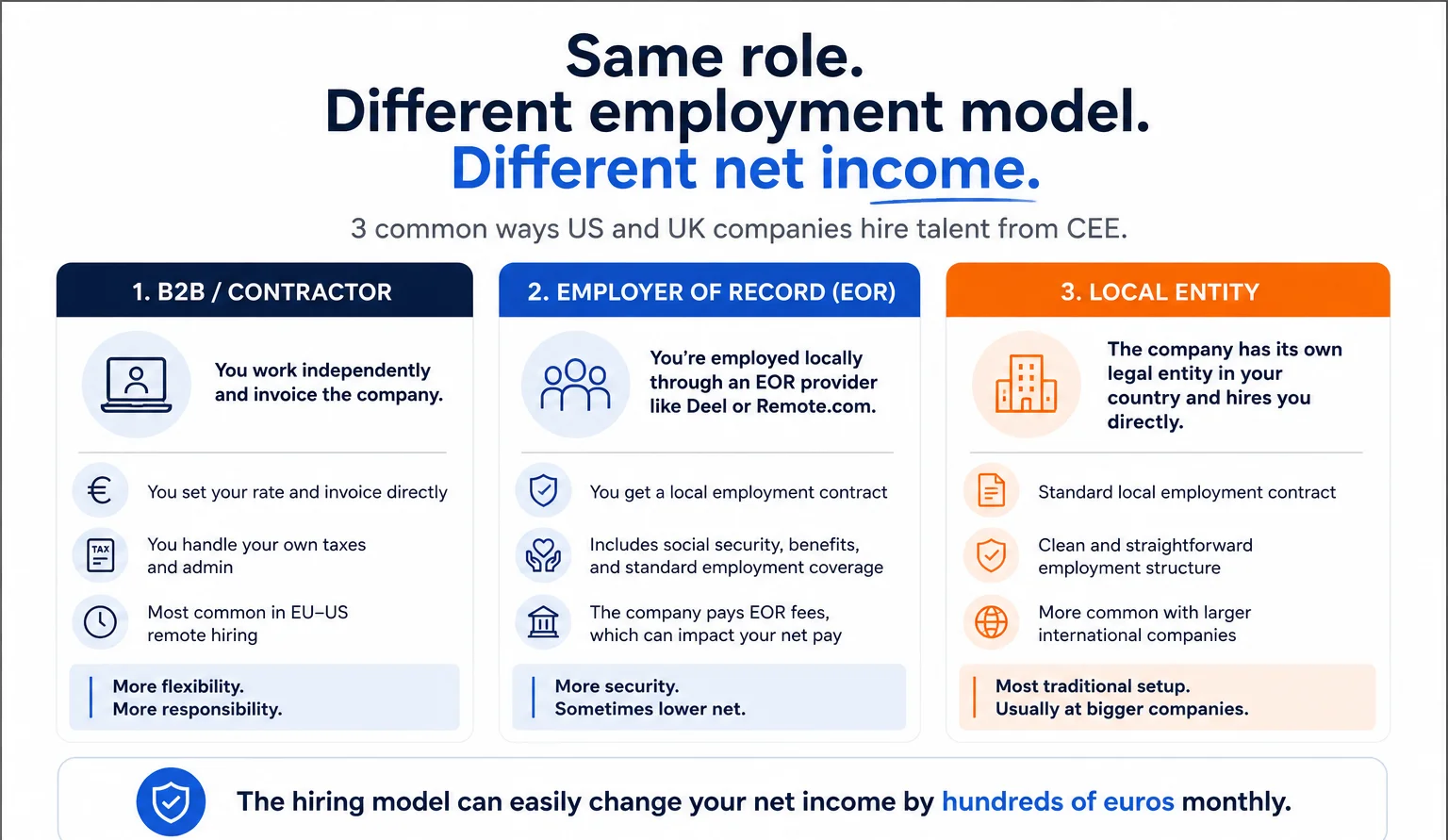
There are three ways a company outside your country can legally hire you for remote work: B2B, Employer of Record, or local entity. Here's what each one means — and what to ask before the process goes too far.
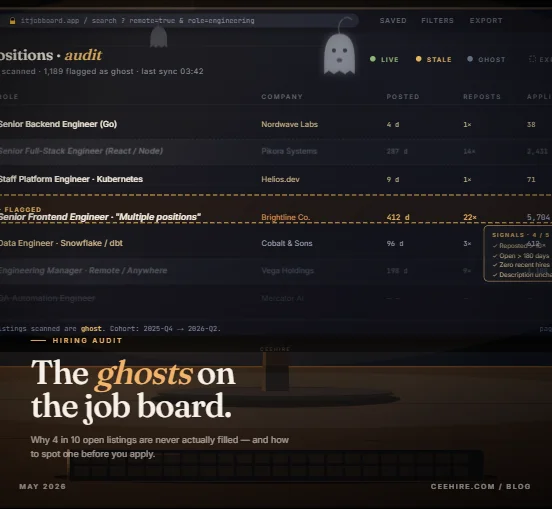
Nearly 40% of job listings aren't actually open. Here's what a ghost job is, how to spot one, and why it matters if you're job hunting in Central and Eastern Europe.