
If you’ve been seeing “agentic AI” in more job descriptions lately, there’s data behind it.
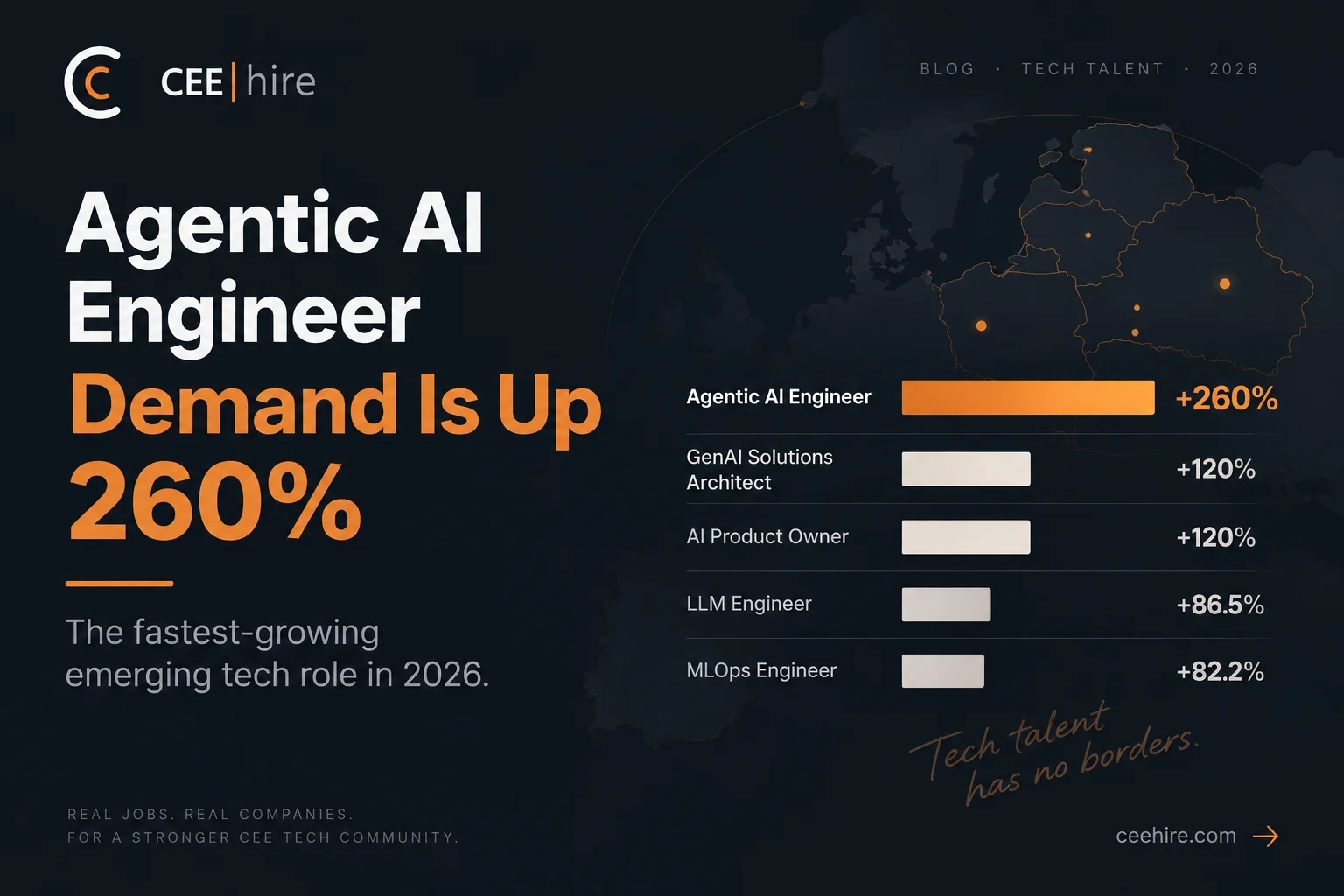
A CIEL HR workforce analysis reported by Business Today in September 2026 found that demand for Agentic AI Engineers had increased by 260% year over year. That was the largest increase among the emerging technology roles included in the analysis.
AI hiring is changing
Agentic AI isn’t the only area seeing strong growth.
Demand for GenAI Solutions Architects and AI Product Owners increased by 120%, while demand for LLM Engineers rose by 86.5% and MLOps Engineers by 82.2%.
At the same time, AI is taking over more routine technical work. According to the analysis, it can already handle up to 70% of routine ticket resolution and reporting tasks and automate around 65% of test-case creation.
The jobs being created around AI reflect that change. Companies increasingly need people who can build, deploy and maintain AI systems rather than simply use existing AI tools.
Why companies are hiring Agentic AI Engineers
Over the past few years, many companies have been testing generative AI through pilots, proof-of-concepts, chatbots and internal tools.
Some of those projects are now moving into production.
That changes what companies need from their engineering teams. An AI agent working in a real business environment may need to call APIs, complete several steps in a workflow, operate within defined rules and know when a task should be handed over to a person.
Building that reliably requires more than prompt engineering.
The work overlaps with software engineering, system architecture and MLOps. Engineers need to think about orchestration, monitoring, evaluation, deployment and the behaviour of the system once it is running in production.
The CIEL HR analysis also points to skills shortages across AI, cloud and cybersecurity, with reported gaps ranging from 38% to 61%. Companies are responding not only by hiring externally but also by training existing employees for these roles.
What does this mean for tech professionals in CEE?
You don’t necessarily need to have “Agentic AI Engineer” as your current job title.
Backend engineers, ML engineers and DevOps or platform engineers may already have part of the required technical background. The question is whether they can combine that experience with AI systems.
Employers hiring in this area are likely to be interested in practical experience with agent frameworks such as LangGraph, AutoGen or CrewAI, as well as production AI integrations, orchestration, monitoring, guardrails and evaluation.
MLOps knowledge is also relevant, particularly around deployment, versioning and observability.
Most importantly, candidates should be able to explain what they have actually built. A project where an AI agent completes a workflow, interacts with other systems and handles real decisions is much more useful than simply listing an LLM framework among your skills.
Side projects can count too. If you’ve built something relevant, describe what the system did, which technologies you used and what part you were responsible for.
Make the experience visible
Recruiters and hiring managers can only find skills that appear clearly on your profile.
If you already have experience with AI agents, LLM applications, automation or AI infrastructure, mention it directly on your CV and LinkedIn profile. Describe the project rather than relying only on keywords.
For example, instead of writing:
“Experience with LangGraph and OpenAI APIs”
explain what you built and how it worked in practice.
That gives employers much more information about your actual level of experience.
Finding remote AI roles from CEE
Agentic AI, LLM engineering and MLOps are increasingly international hiring categories, which makes them particularly relevant for engineers based in Central and Eastern Europe who are interested in remote opportunities.
CEEhire focuses on verified remote tech roles available to professionals in the region.
If AI engineering is the direction you’re moving towards, you can check the latest opportunities at ceehire.com.
Related posts
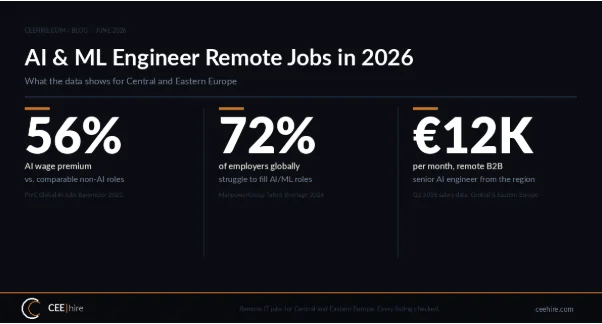
72% of employers globally cannot fill AI and ML roles. The wage premium for AI skills sits at 56% above comparable non-AI work and is climbing. Remote AI and ML engineer roles paying €6,000–€12,000 per month are not aspirational — they are what the Q2 2026 salary data shows for developers in Central and Eastern Europe working for US and UK companies. The problem is not the pay. The problem is finding the roles that are actually accessible from this side of the map.
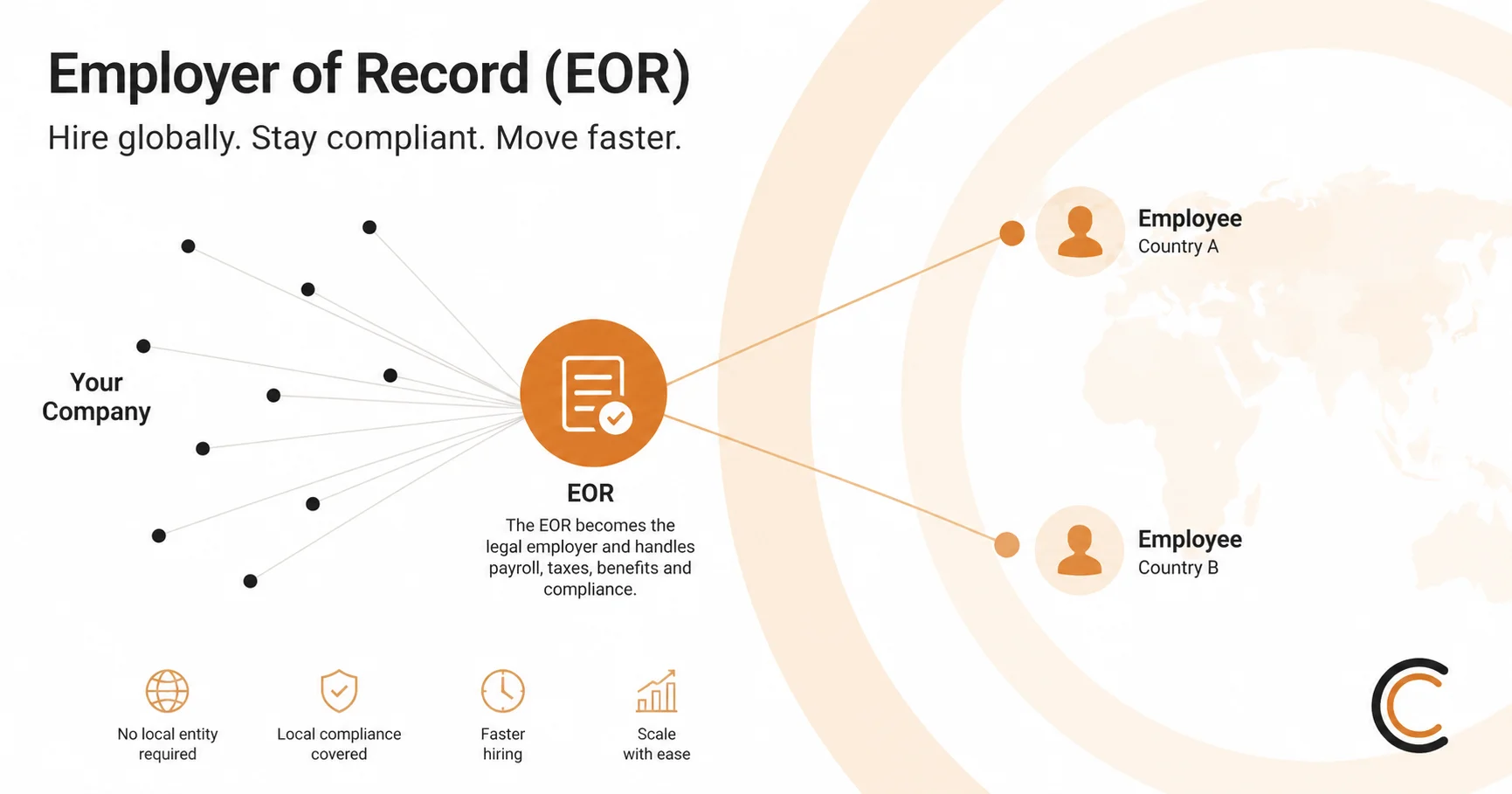
What is an Employer of Record, how does it work, and when does it actually make sense for hiring CEE tech talent? A practical 2026 guide — plus the leading EOR providers compared.

Job boards are getting harder to use for both recruiters and candidates. AI tools now apply to jobs automatically, and the usual fix, building a local network and showing up in person, gets a lot harder once the candidate and the company are in different countries.