
Job boards are getting harder to use for both recruiters and candidates.
Talk to recruiters about what they are seeing and you will hear a similar story. A job that might have received 100 applications a few years ago can now attract a few thousand. A large part of that traffic is generated by AI tools that apply to jobs automatically, often without properly reading the job description.
For everyone involved, job portals are starting to feel more like a spam folder than a useful place to find the right people.
There is plenty of advice around how to deal with this. Candidates are told to spend less time applying through job boards and more time building relationships. Get involved in your professional community. Go to meetups. Talk to people in the industry. Ask former colleagues for introductions and recommendations.
There is nothing wrong with that advice. In fact, it works quite well when the candidate and the company are relatively close to each other, either geographically or professionally.
The problem becomes much bigger with cross-border remote hiring.
Imagine you are a backend developer in Wrocław and you want to work for a Series B startup in San Francisco. Or you are a QA engineer in Cluj and you find a role at a company based in London.
You cannot simply turn up at their office for a company event. You are unlikely to meet their engineering manager at a local conference because you probably do not attend the same events in the first place.
This is important because personal connections and local reputation are often what make a candidate stand out. Someone has worked with you before. Someone has met you. Someone knows that you are good at what you do.
When you are six time zones away and applying from another country, that kind of signal is much harder to create.
This puts cross-border remote candidates in a difficult position. They are dealing with the same huge volume of applications as everyone else, but they also miss out on one of the more effective ways of standing out: being part of the same local professional network as the company that is hiring.
What can replace that signal?
There are still ways for remote candidates to build credibility. They just look a little different.
One of the strongest is having work that people can actually see.
A GitHub history showing genuine activity over time is useful. So is a technical blog or meaningful work on an open-source project. These things take time to build and cannot easily be created just before submitting an application.
That matters. If someone has spent months or years contributing to projects, writing about a particular technology or building something useful, there is a lot more information there than you get from a CV and a cover letter.
Online communities can help in a similar way.
There are Slack groups, Discord communities and specialist forums where people working with the same technologies regularly exchange ideas and help each other. These communities are not tied to a particular city.
Being an active member of one can be surprisingly valuable. You might not be meeting people for coffee, but people can still get to know you, see what you contribute and remember your name when the right opportunity comes up.
There is also another option that is particularly relevant to remote hiring: having a real person verify the opportunity and look at the fit before an application goes through.
This is quite different from another large job board. The problem with a job board is not necessarily the interface. It is the lack of context.
For a candidate looking for remote work from Central and Eastern Europe, it is useful to know that the company is actually hiring, that the role is genuinely remote from CEE, and that the position is still active. It also helps to know that someone has looked at your background and thinks the role makes sense for you.
That kind of basic human check can save a lot of wasted applications.
Companies are dealing with the other side of the same problem
Companies hiring remotely from Central and Eastern Europe are seeing the same thing from the other direction.
They put up a job advert expecting to receive a reasonable number of applications from relevant CEE engineers. Instead, they can end up with hundreds or thousands of applications.
Many of those candidates are not actually suitable. Some cannot legally work in the required location. Others do not have the right experience. Some may not even have realised what the company or the role actually involves.
An AI tool can submit an application in seconds without checking any of this.
The natural response for employers is to add more automation. More filters, more screening questions, more AI-based tools to deal with the volume.
But there is a problem with that approach. Once a process is designed mainly around handling large numbers of applications, candidates who are good at getting through the system can start to have an advantage over candidates who are actually a good match for the role.
The hiring process becomes another system to optimise rather than a way of finding the right person.
For cross-border hiring, there is still a lot of value in having someone look at candidates before they reach the hiring manager.
The basics are not complicated. Does the person have the right to work in the relevant location? Is there enough time zone overlap? Do they have the experience the company actually needs? Are they genuinely interested in the role?
And perhaps most importantly, are they actually looking for this particular opportunity, or did an automated tool simply send their CV because the job description contained the right keywords?
These checks do not sound particularly exciting, but they become increasingly important as application volumes continue to grow.
So what happens next?
The main issue is that the number of applications is no longer a particularly useful measure of candidate interest.
If an AI tool can submit applications on someone's behalf all day, receiving 2,000 applications does not mean that 2,000 people are genuinely interested in the job.
This makes the signals behind the application more important.
The traditional way of creating those signals is through personal relationships, local networks and reputation. That still works, but it is much harder to rely on when the candidate and the company are in different countries.
For people hiring and looking for work across borders, particularly in the remote CEE market, the answer is likely to be a combination of a few fairly simple things.
Candidates can build a public track record through their work, open-source contributions or technical writing. They can become active members of online communities where geography does not matter. And they can use hiring channels where someone has actually checked the opportunity and the basic fit before an application is submitted.
None of this is particularly revolutionary.
But when job boards are filling up with applications generated by AI on both sides of the hiring process, having more technology is not always going to solve the problem.
Sometimes the useful part of the process is still the person who takes a look and asks: does this job actually exist, does this candidate actually fit it, and is there a real reason for these two sides to talk?
Related posts
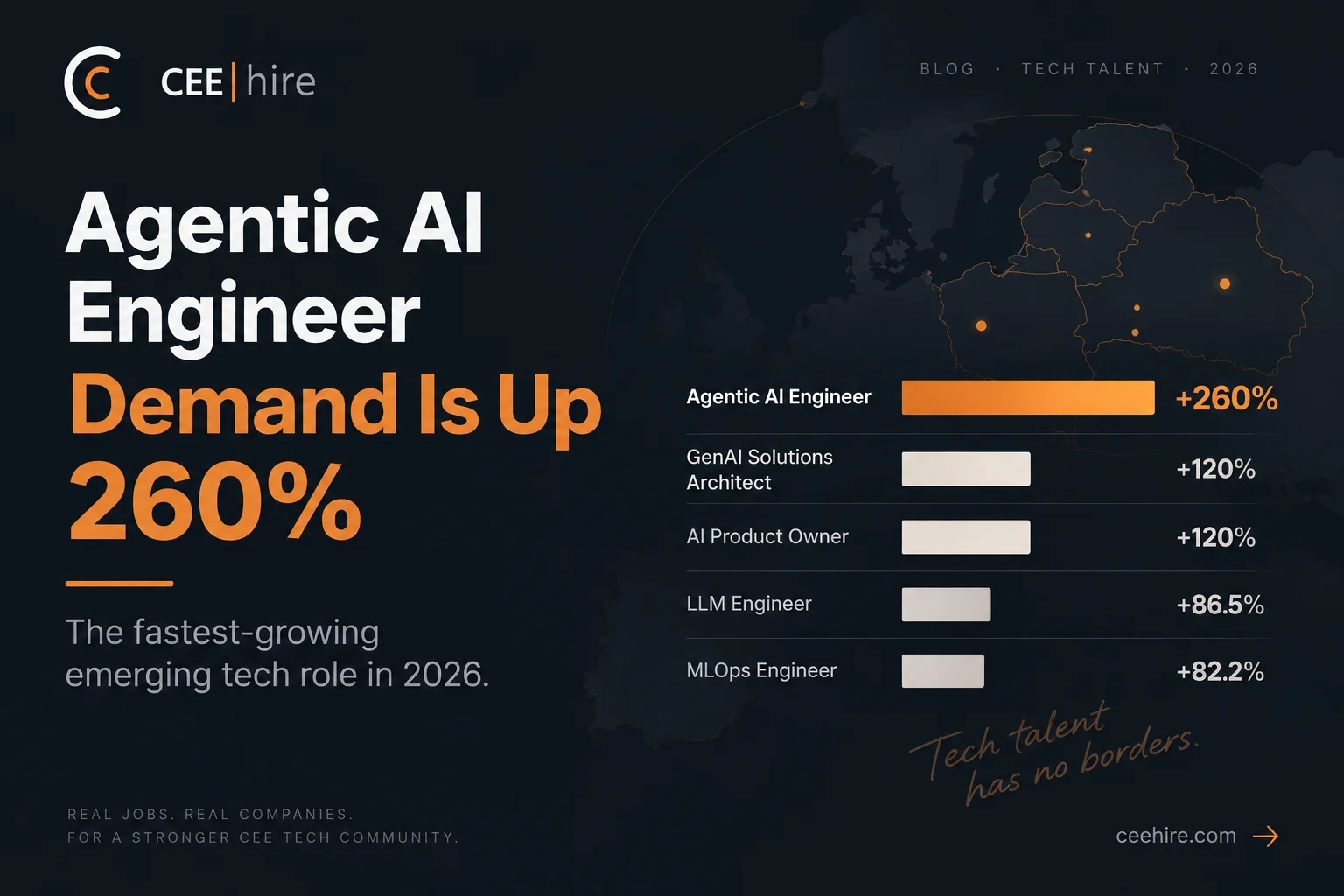
AI hiring is changing Agentic AI isn’t the only area seeing strong growth. Demand for GenAI Solutions Architects and AI Product Owners increased by 120%, while demand for LLM Engineers rose by 86.5% and MLOps Engineers by 82.2%. At the same time, AI is taking over more routine technical work. According to the analysis, it can already handle up to 70% of routine ticket resolution and reporting tasks and automate around 65% of test-case creation.
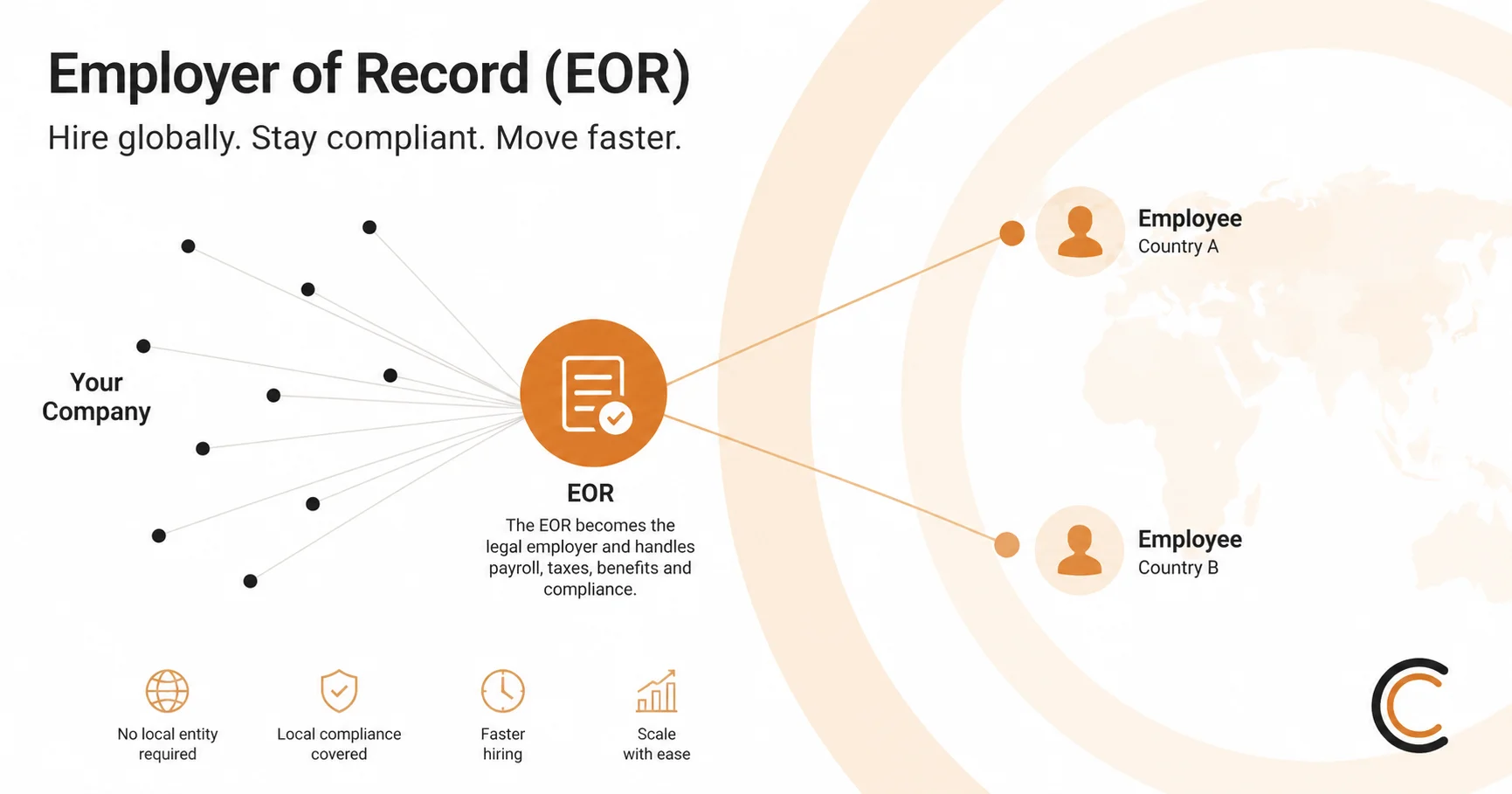
What is an Employer of Record, how does it work, and when does it actually make sense for hiring CEE tech talent? A practical 2026 guide — plus the leading EOR providers compared.
Hiring remote software engineers in Central and Eastern Europe is becoming increasingly competitive. Talent Pool is CEEhire’s fixed-price sourcing service that helps companies access pre-screened, qualified candidates without committing to a full recruitment engagement upfront. Instead of waiting for applications, get a targeted shortlist of engineers matched to your requirements.