

Poland · Hungary · Czechia · Slovakia · Romania · Bulgaria · Croatia · Slovenia
Market reports on DevOps salaries tend to pull from job boards that skew heavily remote-first. The numbers look good. They're also not always representative of what's actually accessible if you're based in Central and Eastern Europe.
This is different. These are our own current verified listings — roles we've checked before posting. Every job on CEEhire is confirmed as accessible from CEE, with a clear contract setup. Here's what the salary and technology data from those listings actually shows.
Salary ranges
The numbers below are monthly, B2B, from listings where salary was disclosed. Not every company publishes rates — but enough do to show the range.
CEE and EU companies: €3,400–8,900/month. The lower end reflects mid-level roles at regional IT services firms and consultancies. The higher end is senior-level at product companies or well-funded EU startups. Polish B2B market rates sit in the middle to upper part of this range.
US and global product companies: €6,500–14,000/month. These are companies like Smartsheet, PVcase, Fundraise Up, CouponFollow — organisations that hire remotely from CEE and pay against their home market, not the local one. The gap between this band and CEE-local rates is significant, and it exists because of cost-of-living differences, not skill differences.
The overlap between the two bands is real. A well-paying EU company and a mid-range US company can land in the same range. What separates them is usually scope, product complexity, and long-term trajectory.
Most in-demand technologies
Across current DevOps listings, these are the skills that come up most consistently:
Kubernetes appears in 38% of listings. It's the baseline for infrastructure roles at mid-level and above — not a differentiator, an expectation.
AWS and Azure appear at roughly equal rates. This contradicts most market research, which shows AWS dominance across the board. In CEE-accessible roles, Azure is just as active — driven by European enterprise clients, German tech groups, and companies with existing Microsoft infrastructure. If you've been building on Azure, the market here is stronger than the headline numbers suggest.
Terraform shows up consistently across cloud providers. IaC is standard, not optional.
Docker and Python appear in a large share of listings. Python specifically for automation, scripting, and increasingly for MLOps-adjacent DevOps work.
CI/CD tooling is present across most roles — GitHub Actions, Jenkins, Bitbucket Pipelines — with GitHub Actions gaining ground.
What this means in practice
If your stack is Kubernetes, AWS or Azure, Terraform, and Python — you're in a strong position for the roles currently available on CEEhire. The companies posting these jobs have gone through a verification process: they can hire from your country, the contract type is clear, and the role is active.
The salary gap between local and international remote is real and it's visible in our own data. The question is finding the right listings — not the ones that technically say "remote" but quietly require US work authorisation.
That's the check we run before anything goes live.
Browse current DevOps openings →
Related posts
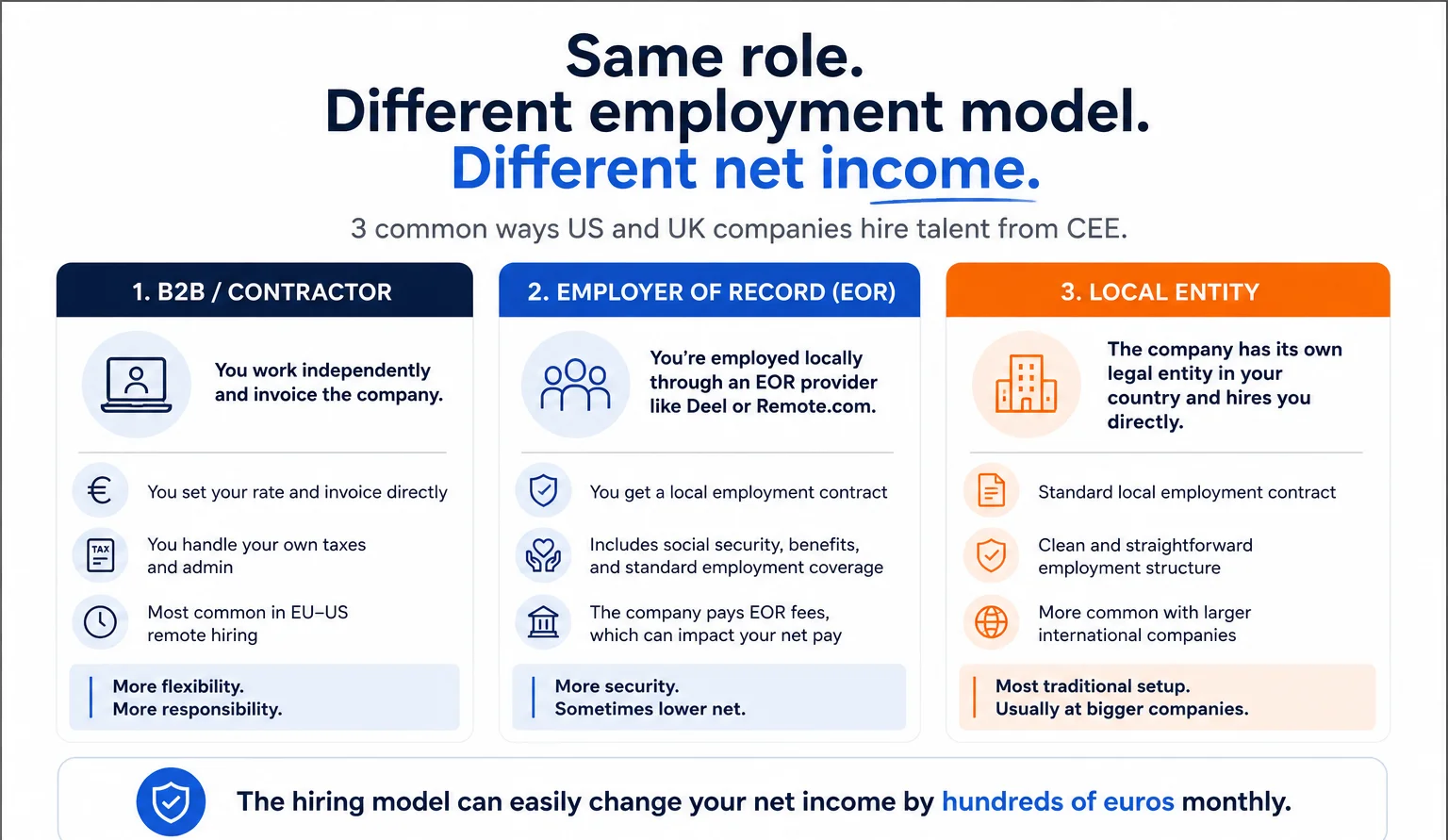
There are three ways a company outside your country can legally hire you for remote work: B2B, Employer of Record, or local entity. Here's what each one means — and what to ask before the process goes too far.
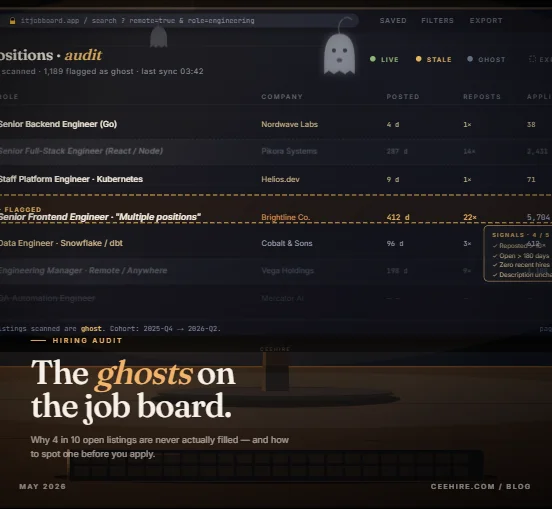
Nearly 40% of job listings aren't actually open. Here's what a ghost job is, how to spot one, and why it matters if you're job hunting in Central and Eastern Europe.

We built CEEhire because finding remote IT jobs that are actually open to professionals in Central and Eastern Europe was harder than it should be. Every listing on CEEhire is checked. Real jobs, real companies, actually remote from the region.